Scott's Oral History
My name is Scott and I live on East Blue Lake Dr. I’ve lived here since December 1957. My father was a real estate broker and he actually worked for Lusk for a short time after we moved in. To tell you the truth, actually what happened sometime soon after that, he went off by himself with another broker and they formed their own real estate company. I don’t think there was necessarily a falling out with Lusk. I have two older brothers and one older sister, so I’m the baby of the family. All the kids on the east side of Indian Ruins Road went to Lizzy Brown Elementary and all the kids on the west side of Indian Ruins Road went to Fort Lowell Elementary. Then we all went to Townend Junior High for seventh and eighth and the progression as far as high school was the original kids that lived here back in the 50s they went to Catalina High and then when Palo Verde was built in ‘62. Then all the kids went to Palo Verde until Saguaro was built in ‘68 then everybody went to Saguaro and then when Sabino was built circa ’73 I believe all the kids from that point on went to Sabino. I’m a Sahuaro 1974 graduate and had a brother and a sister who were Palo Verde ’64 and ’66. My oldest brother never finished high school here - he went back to Indiana where my family came from.
Well originally dad used to tell a story that he actually met Bob Lusk, I believe he was a developer on the East Coast, maybe in New York. He had other developments in the eastern part of the country maybe in Pennsylvania too I’m not sure but I think in New York. Dad used to tell the story that he met Bob (my dad was a traveling salesman in those days) he met him like on a train or a plane flying somewhere and Bob Lusk also I believe had a development in Kokomo, Indiana, which is where my family is from. I believe it was called Indian Heights - anyway it’s a strange connection when your parents die you lose all this stuff so you wish it was written down or recorded somewhere. Anyway dad had always wanted to move out west and he made an epic journey out west in 1932 and had fallen in love with the west. So originally we were going to move out to Albuquerque and I believe he had actually bought a lot in a development and it might’ve been a Lusk development in Albuquerque. My folks drove out there to kind of have a “look see” to see if this was what they really wanted to do. They got out to the development and the site broker said look before you buy a lot here we got another development in Tucson, Arizona. You gotta check it out before you make your decision. So mom and dad drove out to Tucson. They stayed at the Lodge on the Desert. So this would have been probably ‘57 maybe ‘56 and they came out to this development and basically spot on site said this is where we want to be and bought the lot. We had originally bought the lot down on the cul-de-sac but dad wanted this lot. It was already sold so he told the on-site broker that if this would open up, he wanted the lot. After they got back to Kokomo they receive word that this one was available and dad bought it. I believe he bought it for $2000 I believe that’s what he paid for it. For the building of the house and a lot I think the grand total was $24,000 either $22,000 or $24,000 for the house and a lot. I’m pretty sure that’s accurate.
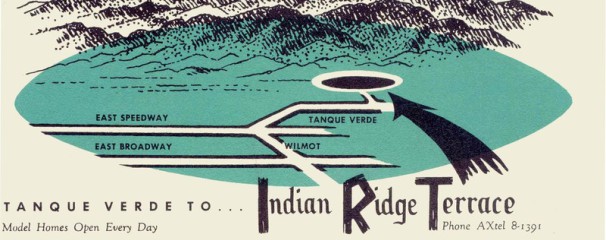
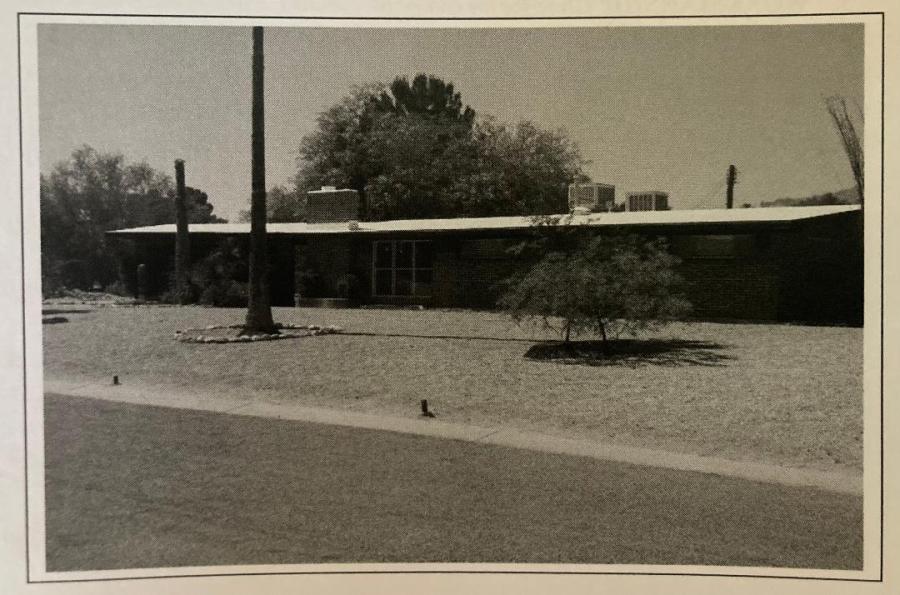
They call this the Kimberly Star model and according to my dad this was something like Better Homes & Gardens model house of the year for 1955 or ‘56 and there are a number of these in Indian Ridge. In fact right in this section there’s about four or five of them. I believe there are two versions of it. There’s a three bedroom version of it and a four bedroom version of it. This is a four bedroom version of it. I love the house and this is called the Kimberly star. I do remember the roads around here Tanque Verde. Basically the edge of civilization would’ve been Wilmont and Speedway. Casa Molina restaurant was up there at Wilmont and Speedway. Across the street from there to the east was like a dude ranch and it was called El Dorado Guest Ranch. They had like these tiki lamps all along Tanque Verde Road and you would drive from Speedway down Tanque Verde down about where the stoplight is there at Wilmont where the Chey’s is. There were about 15 or 16 of those flaming lamps that were out there and that’s how we would direct people out to the house. But Indian Ridge was considered the outpost of civilization in those days. We were out in the boondocks and this was kind of the last piece of civilization on the way to Mount Lemmon or Sabino Canyon. Tanque Verde was just a little lonely, two lane road all the way out to Catalina Highway. Paved all the way out there and then Sabino Canyon Road was a little two lane highway up to Sabino Canyon. Basically that was it - everything east of Indian Ridge basically was ranches. I believe there was a bridge over the Pantano Wash and there was a bridge over Sabino Wash.
There was actually a little par three golf course where that miniature golf place is now and there was a little bar that was called the 19th hole. I believe my parents used to play golf there. There was a little corral with horses and they had pony rides and I’ve got a picture of me on a pony where the Trail Dust Town is now. There was just a little ramshackle collection of buildings there. A guest ranch spread all the way from Tanque Verde to the Pantano wash and of course Kolb Road didn’t come through until 1980 or so. The only building here when we moved out here was a Barney‘s Mobile gas station where Thomas Cleaners is now and he also carried some sundries like bread and milk, but that was the only place to go like on weekends. You could go up there and get a Coca Cola and it’s where you did all of your business as far as your gas, auto repairs and stuff like that. Once you got past Barney’s that was it all the way to town so if you wanted to get anything for your picnic, you had to stop at Barney‘s to get it. Anyway so that’s what the roads were like and the road was just a dirt road in those days. I used to go to kindergarten at Sarnoff and Broadway. That was way out and that was all dirt road to get there so they had to take me up there and that was when I was five years old. I was a little less than two years old when I moved here like in November 1957. So when we moved into the house I was facing two years old. There’s a saguaro up there on that hill right up there and my parents had to camp out here for about three days to keep them from blading the whole yard. I wish they really had the foresight to see cause they’ve bladed everything. Most of what you see here has been planted by people. It’s not the original state and my parents say those mesquite trees right there those are original mesquite trees. There actually used to be a much bigger saguaro that was on that hill right over there on the edge of the driveway and we had to camp out to make sure to save those two things. My parents just didn’t have that feel and know of the desert and everything when they came out here to really think about trying to save more. Almost all these lots were totally bladed.
Wrightstown went out where it goes now and it was paved. When I was a kid, let’s say four or five years old, we knew you’d really hit the big time if you got invited to a birthday party at Deer Ranch which used to be out on Wrightstown Road. There’s a school out there now called Tucson Country Day school. Well that was Deer Ranch and it was like a petting zoo place where you could go out and have birthday parties and they had goats and deer that were penned up and that was really cool so you always knew you’d hit the jackpot if you got invited to a party out there. That was something we always liked to do, but I figured that probably only existed for a few years. I don’t remember past the age of about seven or eight if it was there anymore. Oh and I was going to tell you, you know where the Kentucky Fried Chicken is? Well about 1960 or ‘61 the vitamin store that’s right next to there that building is was built and that was like an early version of Circle K. It was a 7-Eleven store only it was called Pik-Quik and there were two Italian guys, I can’t remember their last names, Larry and Chris and they were in the place and if you go and look at the Architecture of it, it’s a standard old-fashioned Circle K type 7-11 architecture. So once that was built then that kind of became like in summertime you’d have to make it at least one walking trip there to the Pik-Quik and hang out and have a Coke you know and get a candy bar or something like that. That was kind of a hangout in a sense for the kids in Indian Ridge. So that was kind of the second business sprung up around here that you could use. There was a liquor store on the other side of the Pantano Wash that would be like where the Midas Brake or muffler shop is there right there in the west side of Pantano and that was called Tanque Verde Liquors and that was built. I’m going to say circa ‘61 or early 60s so then we finally had a liquor store out here so we had a little market and a little liquor store so we were in seventh heaven we had everything we needed.
There was actually a bowling alley on the corner of Tanque Verde and Kolb roads where the Q Lube or whatever that place is on that corner. There was a bowling alley that was built about 1960 or ’61. It burned down so it didn’t last very long. Burned down twice I believe. They rebuilt it once and burned down again, so I don’t know if it if it was a suspicious kind of a thing but I remember has a kid going over there one of the times it burned. Mom and Dad threw us in the car and we went over there about 9 o’clock at night on a Tuesday night to watch the place burn down. That was big excitement so as far as early buildings and stuff that’s about it. That’s all that was out here for a really long time. My mom she did the grocery shopping at Wilmot Plaza which was at Wilmot and Broadway. That was the closest Shopping Center to Indian Ridge. Anyway there was an A. J. Bayless in there and a Wilmot Drugstore. There was a Myers Department Store and that’s where we went to get all of our clothes. So we did all the shopping there although when we first got to Tucson, if you didn’t go to Myerson’s and if you wanted any kind of clothes or any kind of shopping, you went downtown. That was before El Con Shopping Center. Then somewhere like the mid-60s El Con started gaining a little bit of steam and there were a few businesses in there so you could kind of shop at El Con and buy your clothes and stuff.
My dad refused to be a member of anything so we did not belong to the community pool. My dad was not a real joiner. When my parents moved out here they had four kids, and we still can’t figure out how they clothed and fed us. Dad worked but it’s still kind of a mystery. We lived a great life, but Mom and Dad really didn’t have an extra penny to do anything and Dad said it was too expensive so we didn’t do it. When I was a kid growing up it seemed like they were all kinds of kids that were part of the Swim Team and the kids that weren’t and I was a kind of one of those kids that wasn’t. But I was real happy being one of those kids so it was no problem. I really had no aspirations actually. Some of our neighbors around the area did have pools. I learned to swim in the house two doors down so I always had access to a pool so it wasn’t a big deal. I was like I was “pooled up”. The Fourth of July parade didn’t come until I was all grown up. I don’t know when they started but I don’t think that started until after I was out of high school but I may be wrong about that. That kind of stuff really wasn’t going on when I was a kid.
One thing that’s really cool about Indian Ridge is all the flora that has grown-up. When we first moved in we used to have a lot more cacti in the yard and desert floral than we do now. I’d say at least a third of what we originally planted died off for whatever reason maybe it wasn’t transplant planted right or something. Most of what we got we went up off River Road and we dug it up. Brought it back to the yard and that’s what most people did around here. What’s kind of cool is all the trees and all the flora have really grown-up and it’s so beautiful but the unfortunate change has been just the traffic. I would say when we grew up here on a weekday night you could go 30 to 40 minutes at a time and they will never cars up and down Sabino Canyon Road. It was a rare sight in the evening. If there was an ambulance everybody would run out in the backyard and watch it - that was a big deal. It was just very quiet out here. It was really quiet. It was very rural. One of the highlights of living here in Indian Ridge when I was a kid across Sabino Canyon, where the big cement boot is, that was a guest ranch called Ranch Del Rio. They ran a string of about 30 or 40 horses that were right out there on Sabino Canyon. We spent a whole bunch of our time just hanging out over there, feeding the horses and kinda hanging with the cowboys a little bit, talking to them anyway. Occasionally doing a few little chores for them and they would let us ride the horses and stuff like that. That was the place to go and hang out and they had a Coke machine over there so we could buy Cokes over there.
But that was another thing so everything to the east of us was all desert and ranch land. Everything to the north of us was ranch land and desert so it was very rural. You walked a quarter of a mile in any direction even less than that and you were out in the boondocks. You could do anything you wanted and we did we spent a lot of our time down at the Tanque Verde Wash. We go down there and shoot 22s and stuff like that. No one ever thought twice about it. Most of the time we were just shooting our BB guns and stuff down there. Back in the old days, over the years, I’ve seen deer down there maybe twice way back, but you certainly seen coyotes, javelina, stuff like that. I’ve got javelina coming through the yard almost every night yeah right now. I come home at midnight every night and four very large javelina standing around in the driveway, I had to kind of plow through them to get in. It’s still pretty cool. A neighbor claims they got a bobcat up there, but I’ve never seen it. Another place we would hang out is the western edge of Indian Ridge where the newer homes of the country club were built in there between the golf course. That was all a Mesquite Bosque and it was that way up until 1985 or so and that was another place where we go and hang out. We had little forts there and you could just do anything you wanted. Not that we were up to anything really bad but out of sight out of mind and we were just typically mostly boys hanging out doing guy things like catching lizards and all sort of stuff like that. We spent a lot of time up at the Indian Ruins when I was a kid. We weren’t really supposed to but we did. I collected bags and bags of pot shards from up there and had them around the house. Just hundreds of no account pot sherds but at one point my dad made me go back and dumped them all up there. So I did - so I gave them back, but all sorts of kids did that kind of stuff. The Indian Ruins was one of the places we went.
Basically when I was a kid, we never got out of the neighborhood. Nobody put you in a car and took you anywhere as a kid like they do now. My parents would say we moved out here to the desert with sun 365 days a year so go outside and play. That was the only thing that was mantra “go outside and play” and that was our job and that’s what we did. There were no parks to go to. Sabino Canyon was four or five miles down the road and my family used to go up there on Sundays. We cook breakfast up there and that was really fun. That was really cool. We used to be able to drive in there even when we moved into Indian Ridge I believe you could still drive up there so you drive up there and you’d have a picnic and breakfast for a couple of hours so that was really cool. Again it wasn’t those types of things people who have kids now plan their whole life around where they’re going to take their kid next. Rare was the time that people threw you in a car and took you anywhere? That’s the way it was and we accepted it and it was fine. I was Cub Scout through school, but it was something I thought was a big thing in Indian Ridge per se. I may have missed out on something I didn’t know about so I don’t know. Maybe there was a huge scouting thing going on, but the guys I hung out with, Boy Scouts wasn’t a big thing. It was pretty wild out here.
I was born January 56, so my dad was actually a on-site broker at Fletcher Caida later on like ‘59 or ‘60 so he had a little office up off the River Road between Swan and Craycroft. It was always a special thing for me every once in a while I’d go up there and spend the day with him when I was four or five years old and I just hung out with dad and he do business up there. River Road was just a dirt road almost all the way from Swan to Sabino until probably 1980 or that’s where he worked when I was a real little kid. He just worked for a different real estate companies. We had a 1956 Ford Fairlane 500 convertible that was a really cool car and we were really proud of that. I think my mom had a ‘52 Plymouth or something like that. We had those two cars for a while and then I remember we sold the Ford and dad bought a ‘64 Chevy Malibu. Dad went to work for the University of Arizona around ’63 or ‘64 in the neighbor right next-door to us was the Vice President at the University. Through a set of circumstances my dad was somehow able more or less to become the real estate broker for the University of Arizona. He started working there in ’63 or ’64 and worked there in until his retirement in 1980. That was a really good thing for him and our family. He got retirement out of it and a really steady income so it was a real Godsend. In between he was actually a food broker for the military at one time and he worked for a company that catered strictly to military bases for a couple of years in the early 60s. He was on the road a lot when you did that. I really don’t remember what professions our neighbors were in being a kid that’s something you really don’t pay that much attention to. There was a doctor, a chiropractor and a geologist who I think was a professor at the U of A right across the street from us. There was a Rincon High math teacher across the street and a dentist on the corner. That’s probably about it. You just don’t think about that much when you’re a kid. My mom do not work. She was a stay at home mom - a domestic engineer. She was great mom and dad used to have little parties when we first moved in here. It seemed like quite often they had a little gatherings. It was so cool from most of these people to come from a cold climate in the Midwest just to be able to be outside all the time. They would hang out here in the back on the porch and mix their cocktails and drink Coors beer - that was a big deal and they’d watch the stars. They thought that was great.
One thing that’s kind of odd nowadays compared to them growing up was there were never a mosquitos in Indian Ridge. I just moved back into the house. My dad passed away in ’02 and I just moved back in and the fact that I have to deal with mosquitoes here is so odd. You never would’ve thought about it when I was a kid so that’s one of the changes. I guess it’s just a lot more water around now. That was one of the great things for my parents moving out here - they didn’t have to deal with mosquitoes or insects. They could go outside and they didn’t have to cover themselves up with clothes. When my parents moved out here they went native total native. I don’t think my mother wore a pair of shoes after she moved out here. That was a big deal for her. My folks were total native and expected us too and basically we did. I loved growing up here. We came from a great place in Indiana called Kokomo and it would’ve been a great life growing up there, but I couldn’t thank him enough for bringing me out here and letting me grow up here. Indian Ridge is a great place then and now. I wish I had documented the whole what it looked like before they bladed the lot. I’m not sure they were out here before it was too late. I’m not sure they understood it’s going to be bladed. You know it was one of those types of things I wish I had. We got some early pictures of our house. I think you got a picture of me in ‘58 so we had just moved in, standing in the snow. It snowed in February 58, and you could stand in the front yard in the snow. I don’t have a lot of early pictures, only a handful. This is a little foggy in my memory, but I believe when my dad came out here though that was the original plan that he was going to come out here and actually work here in Indian Ridge and sell homes here. I’m not sure whether that really happened or if it did maybe it went on for six months or a year or something.
Usually we did some type of summer vacation. I was the baby by a longshot so my siblings are like 15 years 10 years and 8 years older than me so really after we moved out here my oldest brother spent all about six months here and he was gone. He joined the army so then I was here with my other two siblings and they were teenagers at that point and they weren’t interested in going on vacation with the folks and stuff like that so pretty much it was my folks and I but we usually took some kind of a little two week vacation. My dad loved to drive and I love to drive. We went all over Arizona and all the attractions around Arizona so that’s it. We took a lot of trips to Indiana to go back and visit the relatives so we would make some epic journey to do that. Yeah usually took some type of a trip but other than that, we were stuck in the Ridge all summer along, and I will tell you that in my mind I think one of the questions was what was the weather like or how it’s different. It seems like it’s a lot hotter now than it used to be. It just seems a lot hotter at nighttime. Doesn’t cool down near as much as it used to. I think that’s probably able to be documented. I think the humidity has changed too. I think all the pavement holds in the heat so it was a little bit milder summer. I would say that’s my memory. We never thought twice about the cooler not taking care of us all summer long and I’m still basically doing the same. I have an AC unit on the house but I don’t use it. I like the evaporative cooler. Yeah it’s different now. Yeah, I’d say I’ve seen a change in the climate or weather. It just seems hotter. The summer is a little tougher to get through, but of course you’re a little bit older too. That might have something to do with it.
When it rains when it was a monsoon, basically parents said you ought to go out and play in the water. Nobody was afraid of lightning or anything and it was fun. It was time to go and play. Yeah you go out and play in the water. We go down to the wash when it was in full flood. Jump into it and float down and we would grab onto some tree so we didn’t get washed down to kingdom come. We did a lot of stuff that was really dangerous that if anybody had really known about it, they’d have been really concerned, but in those days, people didn’t care about that stuff. Think about all the things you read in the paper - people getting washed away in the wash and stuff. I can think of a number of times that I floating down that wash that I shouldn’t have been, but we didn’t think twice about it - you were just having fun. It was like Tom Sawyer and Huckleberry Finn you know. The minute you got out the door, this is the way I thought about everyone’s parents, they were happy to have us taking care of ourselves. They were busy doing whatever they were doing. They trusted us. Nobody ever got hurt and we did all sorts of stuff with our BB gun and occasionally a 22 and nobody ever got shot and we used to shoot each other with the BB guns but the deal on that was you kept your mouth shut about it. We’d all dress up in our sunglasses with our father World War II army surplus gear. Almost every father around here when I grew up had been in the military. World War II and almost every kid had a pretty good stash of army surplus of some sort so anytime we wanted to play at war or whatever we had our full outfits. We had our helmets and we had our jackets put all the stuff on and when we shot each other, the BB’s sort of bounce off of you. We thought they bounced off the glasses and you were supposed to aim someplace where you really couldn’t get hurt. Everybody used to have firecracker wars, which was one of the things that used to go on in Indian Ridge. When I was here that was really cool thing a big deal up until ’64 or ‘65 for every person you took now to Nogales down in Mexico you could bring back I think a gallon of booze and it was cheap down there for the parents in the neighborhood. Not all the parents, but the parents that were friends of my parents. Maybe for five different families we will go down there with these caravans and they wanted all the kids to come along because they could bring a gallon of booze for each one of the kids. We would go over and spend a day in and come back but the deal is that somebody had to smuggle firecracker across the border and bring them back. So we’d pool our money together and somebody would attempt to smuggle them across and about half the time somebody would get caught but no big deal. That was a big thing we were always working on in the summertime how we’re gonna get firecrackers? Who is going to smuggle them across the border but we usually found a way to do it. We used to have firecracker wars around here. I don’t think my folks knew about it. I still can’t hear out of my right ear because I had one blow up in my ear when I was about 11 years old, but being a school teacher, I see how kids are coddled nowadays and they don’t live real life. I was allowed to live in real life so I was really happy about that even though I can’t hear I mean we would never think of putting on a helmet when you go out and ride your bike. Kids get on bikes nowadays and they got a helmet, they got elbow pads. It’s a whole outfit you know and they still get hurt. We rolled like everywhere in the Ridge and we did all sorts of crazy things. I don’t remember one kid who got hurt or broken bone maybe yeah we had rock in our knees, but hey that’s part of being a kid. Big differences now and then.
I remember one time when a kid down the street caught a Gila monster and that was a big deal. When I went down to look at it, you wonder about your memory sometimes, I could’ve been about only four years old, but my memory was that he took a stick and he propped his mouth open and he was inviting the kids to stick their fingers in it but you wonder sometimes about some of those memories I wouldn’t claim that actually happened but in my memory it did. I can remember sitting on the fence here. Now this fence was built out here was basically my prison wall. So this was built to hold me in because when I was two or three or four years old when I got out the door, I was gone. There was nothing but dust so when Indian Ridge was built the very first phase was a section where the pool is so on the east side of the Indian Ruins Road were from Tanque Verde to Katchina Court that was basically the first phase in there and that was put in I’m going to say ’55 to ‘56. I lived in the area which is called Indian Ridge Terrace Estates and it was basically I believe the fourth phase of the development. It wouldn’t have started until ‘57 I don’t believe. The area that’s up by Tanque Verde in about halfway down maybe to Opatas Street or something like that, that’s called Club Crest Estates I believe and maybe your section, I’m not sure where Tawa is, but the next section to Indian Ruins, that section was another phase. I believe there were four phases in this section. We’re in now what is called Indian Ridge Terrace. It was actually developed in two section. The first section is where we are right now that was only this area and the other part that was developed with Arrowhead, Blue Lake Drive to right on this side and then about 1959 and ‘60 everything that’s to the north and west was put in. All those houses that were below me are ‘59 ’60 ‘61 all those like on Potawatomi that’s all like ‘59 ’60 ‘61 so I remember sitting on this wall couldn’t have been about four years old. Those are my earliest memories and them blading those rocks down here and watching the little rabbits and squirrels and stuff run from the tractors. At a very early age it really affected me. I just felt so bad for the animals. I got a real sense of caring for wildlife and stuff like that and my parents kind of put that into me anyway. I remember them blading those lots down here because it was very exciting for me because I could see where they parked the tractors at the end of the day, then we go down and play in the tractors.
I’d like to tell one thing that’s strange since I move back in here is how often they do the fireworks over at the Country Club. Soon after I moved back in I was in bed one night about 9 o’clock, and it’s not the Fourth of July and all of a sudden I start shaking and I hear this huge explosion. Couldn’t figure out what the heck was going on so I walked outside and we’ve got fireworks. So now they do them five times a year sometimes and it’s great. I mean it’s an outstanding show from my backyard here. I’ve got a perfect sight of it. It’s just perfect but when I was a kid they did that on Fourth of July so the big thing to do when I was a kid let’s say from the time I was four years old until maybe 12 we go sneak onto the golf course. That was another thing you could spend a lot of time doing sneaking onto the golf course at the Tucson Country Club. Just messing around over there but anyway we spread our blankets and stuff like that and you weren’t supposed to be there of course, but we were there and as a fireworks exploded the tailings came down like the leftover cardboard or whatever so we chased those and that was always a lot of fun to do. Of course I got my hand burnt real bad one year on that but yeah stuff like that. That was a real big deal to get up on the roof and watch and that was always a big deal to do. Fourth of July was always a big deal but there was no parade or anything in those days. Luminaries are a new thing so that’s all new. Like I said it was pretty quiet out here - real sleepy. There wasn’t a strong Indian Ridge association. It’s still very mellow and I’m glad that it is. I hear about some of the other association around town and what they pay to be a member. It’s required and it’s nuts. It’s crazy. Yes I like the way it is.
We went up to Mount Lemmon a lot - that was a real special thing. I love going up there. I tell people that I feel like the Catalina mountains are in my backyard and Sabino Canyon is my backyard. I’ve probably been up on the Catalinas oh hundreds of times. I spent the night up there well over 70 times. A lotta camping up there yeah that was a big deal so we go up there a lot. I’m not a skier, never been skiing up there. I’m a real desert rat; get me out of snow. We were really into southern Arizona and hiking and all that kind of stuff.
Well something that is different and I think most people my age will tell a similar story maybe wherever they grew up, but Halloween was a really big deal when I was a kid and those days you would never buy a store-bought costume like one of those cheap things at the grocery store. You would make your own costume and maybe your mom would help you but you’d make a costume and on Halloween night it seemed like there were literally hundreds of kids out trick-or-treating and you went out at sunset and you were out messing around at least until midnight. Oh yeah, it was a big deal on that night and everybody expected it to be. It wasn’t like you were up to really terrible things you were just trick-or-treating you were hanging out- You were part of the ‘hood type of thing. What’s odd after I grew up coming back when my parents still lived here and then moving back in, I don’t think I’ve had a trick-or-treater for the last three years not even one. it’s just odd. It’s hard to see the neighborhood grow up. When I was a kid there were a lot of kids in the neighborhood. Yeah it’s a safety issue I understand that it’s just kind of a shame you’re taking the kid out of being a kid or the fun out of being a kid or something like that. I definitely remember that was a big deal. Fourth of July was a big deal the fireworks kind of little things like that were a big deal and they don’t really happen that often.
The rest of the time you were pretty much expected to entertain yourself. I played a lot of baseball just right out here in the Street even though I’m a desert guy and I lived out in the southwest, I played a whole lot of street football and street baseball. You dashed into the cactus to get the ball. Yeah it’s a different type of life, but we had a blast out there. We played all sorts of games like kick the can. We had this game called monster which was a chase game like a tag game in the summertime. We were out every night in the summertime. The routine was basically you’d get up in the morning it might be out with your buddies by about 9 o’clock and you start playing baseball. We’d start a baseball game out in the street and we play until lunchtime then we’d go home and eat lunch or go to someone’s house and eat lunch. We come back at 1 o’clock whatever it was. No shirts on and never wore shirt never thought about sunscreen or anything like that and we play until dinner time. We’d go in at dinner time and then we come back after dinner time and it would still be light out for another hour half or two hours to play. We had these baseball games that were like 272 to 264 and we just keep going. We had endless monopoly games. We keep it set up in someone’s room and we played that for days on end One thing that someone that grew-up here should mention is Chiller Theater. I think it was on Saturday night. They had Chiller Theater on K-GUN on TV. It was a horror movie show where they had a host whose name was “Dr. Scar”. I can’t tell you when it started maybe nine or 10 o’clock and that was a big deal and you’d watch a horror film and that was really cool. You kind of plan your summer around watching that every Saturday night. Then they extended it into a double Chiller Theater and they show two horror movies back to back. I don’t know how the time worked. Maybe they started a ten until 1 o’clock in the morning. It wasn’t unusual for me on a Saturday night to be walking home in the neighborhood at 1 o’clock in the morning. There was nothing wrong with that again. You were just trusted to be able to take care of yourself in those days.
One little thing that I did at the pool in the mid to late 60s was they used to show a movie up at the pool. They charge a quarter or 50 cents for it and they had a projector. They would show cartoons and then they would show a regular show a movie, that was kind of a cool thing for a few years. We’d all walk up to the pool on Saturday night and you pay your quarter of 50 cents and you’d watch the movie. It was a way for them to raise some money for the Swim Team. As far as the pool thing that’s about the only thing I remember. Where the shopping center is behind the pool where Eclectic Café and Big Lots - all that that just used to be an empty lot that stayed like that until the shopping center was built. I’m going to guess in an early 70s that was kind of a place to go and hang out. It was kind of a trashy desert area, kind of a wildcat dump area unfortunately. We always had hoped that maybe they build a park up there where we could go and play ball but it never happened. Nobody ever tried to get it going. There were underground forts there that we built so that was another place we go hang out. The neighborhood called Redbud Estates was on the other side of Tanque Verde Road behind the Ramada Inn that had about 25 home back there. That’s a little development back there but that whole corner too was just desert and that was another maze of forts and stuff like that so we go over there and play and hang out there. Yeah we actually dug underground forts - not really elaborate stuff but we’d make our little forts and stuff. That was also in that era about 1960 when people started building bomb shelters. My dad refused to build one and I couldn’t understand why. I just remember saying dad so and so has a bomb shelter why don’t we. And he would reply - what happened when your best friend Rocky comes knocking on the door and he wants to come in and we only have enough supplies for our family and we have to say no. Would you want me to say no? I guess not so I can remember that to be digging stuff underground was kind of natural. You were pretty interested in doing that kind of stuff in those days.
Oh one more landmark that came to mind. There used to be where Arrowhead Road is where it comes in where the alley is just to the south of there. There used to be these Adobe walls and we called them “The Pink Gates”. That’s what everybody called them. They were really old, really ancient and that was our bus stop. So that’s where we’d get picked up by the bus, but it was a landmark to get people out here - so when we directed people out here, you’d say take Tanque Verde then turn north on Sabino Canyon Road and drive until you hit the Pink Gates. After the gates, you take the next left turn. That’s how people were getting here but a lot of people in this area would know about the Pink Gates so that was a landmark. That was the road to the original ranch house up by the Indian Ruins.
You might have just run me dry. Okay, I just had a thought about early neighborhood stuff and how they kept you in line. When you were a kid the big threat was if you were a bad boy you were going to get sent to Mother Higgins. So if you violated the law in any way, shape or form that was a juvenile hall and it’s called Mother Higgins. Everybody was afraid of going to Mother Higgins, and when your parents got mad at you and they thought you were being really bad they’d say well your next stop is Mother Higgins, and that was supposed to put the fear of God into you. So if you’re really, really bad, if you’d spent too much time at Mother Higgins, then you were transferred to Fort Grant and there were some guys here in Indian Ridge that I grew up with that went to Fort Grant and after they went to Fort Grant, they never appeared again in Indian Ridge. I don’t know what happened to them. I think it was back in those days you didn’t get three strikes. You got one basically and if you did something really stupid you ended up in reformed school and maybe you didn’t return There should be other people that could tell you the same Mother Higgins story because I run into people around town all the time or my age and we talk about Mother Higgins so that was a big threat when I was a kid and that’s about it. Okay there you go.
 Print
Print 